Congratulation to both Harnjoo and Harrison for graduating high school ! Over the time, they both have been exceptional students and did their best to advance their kendo rank. Harnjoo will head to Georgia Tech and Harrison will move to USF. Good luck to you all Information
What is Kendo ?
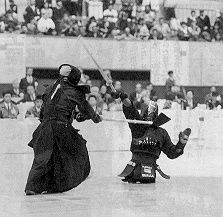
Kendo means "way of the sword" and is the traditional martial art of Japanese fencing. Kendo players fence with flexible bamboo practise swords (shinai) using both the edge and point of the sword to hit targets on their opponent's armour. The four main targets are the top of the head, the throat, the abdomen and the wrist.
In budo, Japanese martial arts, "do" refers to a path or way to self-improvement through martial training. Kendo teaches not only physical fencing techniques but also a philosophy which is inherent to budo. Kendo develops strong spirit, positive attitude and respect for others.
Practice Location:
Club Tampa Palms
16402 Tampa Palms Boulevard Tampa, FL 33647
Practice Time: Friday. 6:30pm~9pm
Beginners: 6:30pm - 7:30pm
Advanced (Kata): 7:00pm-7:30pm
Advanced (Bogu): 7:30pm-9:00pm
Price: $25/person or $35/family / month
Also you need to pay to SEUSKF and AUSKF membership fee by March 1, 2012
Adult(18year or older): $70/year
Children(younger than 18years): $50/year
University Students: $45/year
This fee will help our federation to buy liability insurance and help us to organize events. Please keep in mind that only paid members are allowed to take shinsa(test).
For your membership info for SEUSKF and AUSKF, you can check their website. http://www.seuskf.org/html/members.html
Contact: Sungmin Ro, tampakendoclub @ gmail.com
AFFILIATE DOJO
Summerlin Kendo Dojo
Summerlin Academy
1500 South Jackson Street
Bartow, FL 33830
$30/month
Every Wednesday
5:00pm-7:30pm
New Student Application Form:
Download New Student Application Form(Need MS Word): Please print and sign this form when you come to practice
We are also affiliate of AUSKF and SEUSKF
Kendo means "way of the sword" and is the traditional martial art of Japanese fencing. Kendo players fence with flexible bamboo practise swords (shinai) using both the edge and point of the sword to hit targets on their opponent's armour. The four main targets are the top of the head, the throat, the abdomen and the wrist.
In budo, Japanese martial arts, "do" refers to a path or way to self-improvement through martial training. Kendo teaches not only physical fencing techniques but also a philosophy which is inherent to budo. Kendo develops strong spirit, positive attitude and respect for others.
Practice Location:
Club Tampa Palms
16402 Tampa Palms Boulevard Tampa, FL 33647
Practice Time: Friday. 6:30pm~9pm
Beginners: 6:30pm - 7:30pm
Advanced (Kata): 7:00pm-7:30pm
Advanced (Bogu): 7:30pm-9:00pm
Price: $25/person or $35/family / month
Also you need to pay to SEUSKF and AUSKF membership fee by March 1, 2012
Adult(18year or older): $70/year
Children(younger than 18years): $50/year
University Students: $45/year
This fee will help our federation to buy liability insurance and help us to organize events. Please keep in mind that only paid members are allowed to take shinsa(test).
For your membership info for SEUSKF and AUSKF, you can check their website. http://www.seuskf.org/html/members.html
Contact: Sungmin Ro, tampakendoclub @ gmail.com
AFFILIATE DOJO
Summerlin Kendo Dojo
Summerlin Academy
1500 South Jackson Street
Bartow, FL 33830
$30/month
Every Wednesday
5:00pm-7:30pm
New Student Application Form:
Download New Student Application Form(Need MS Word): Please print and sign this form when you come to practice
We are also affiliate of AUSKF and SEUSKF
Frequently Asked Questions..
About Tampa Kendo dojo
Tampa Kendo Dojo is a non-profit organization. The instructors (Sensei’s) are all volunteers. This means that we rely on dues, fundraisers and membership & family member volunteers.
If you are in good health, you can learn and practice kendo at any age. However, we recommend that children wait until they are 6 or 7 years old before starting. This is due to the inability of younger children to concentrate for extended periods of time. If you have any health problems or concerns (i.e. asthma, heart condition, high blood pressure, etc.), as with any exercise program, please consult a doctor prior to starting Kendo. Currently our students range in age from 6 to 64.
I am Very Interested in Kendo Because I just saw..(select movie)..Crouching Tiger, Hidden Dragon, Kill Bill or The Last Samurai. When will we be working on fancy sword work like that? Will Kendo be just as exciting as the movie?
Tampa Kendo Club is a traditional Kendo Dojo strictly focusing on the fundamentals of Kendo. As a beginner, you will be performing the same fundamental drills to learn etiquette, footwork, and how to correctly swing the shinai and bokuto. Please be advised that you will not be wearing bogu (armor) for at least 4-6 months. Please note that YOU WILL NOT BE practicing in a field or practicing forms against a sunset background. Additionally, THERE WILL NOT BE flashy sword work such as spinning the sword, two sword techniques or flying kicks taught. We do not teach that type of swordmanship that you see on the movie screen. It is entertaining and we enjoy those movies too, but that type of swordsmanship is based on cinematic stunt choreography and has little to do with the actual practice and lifelong study in the art of Kendo.

As a beginner, what should I wear to practice?
We suggest you wear comfortable loose fitting clothing such as sweats and a t-shirt.
What kind of Equipment do I need ?
A beginning kendoist will need to purchase a shinai. You may purchase your shinai directly from www.e-mudo.com. We may be able to lend you a shinai in first couple of classes but you will need to purchase your own. For beginner, you will need to buy a "complete kendo shinai with leather parts."
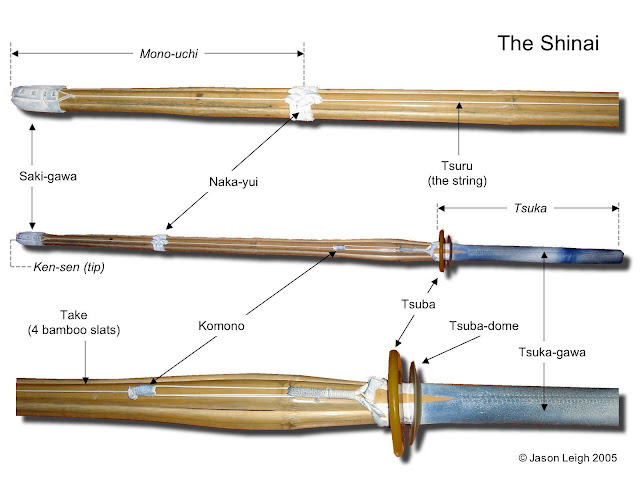
SHINAI SIZE REGULATION
Adult male: Size 39
Adult female: Size 38
Ages & Size
4-6 years old: Size 32
7-9 years old: Size 34
10-12 years old: Size 36
13-15 years old: Size 37
HOWEVER, THIS SHINAI SIZE MAY DIFFER DEPENDS ON YOUR HEIGHT AND WEIGHT. PLEASE CONSULT WITH SENSEI OR SEMPAI BEFORE YOU PURCHASE SHINAI
When should I purchase and wear the Keikogi and Hakama?
During the beginner phase, we suggest wearing shorts. This is to avoid any extra investment by the student should they wish to discontinue studying kendo soon after they enroll due to work schedules, relocation, change of heart, etc.
When can I put on the Bogu? Why does it take so long to get into Bogu (armor)?
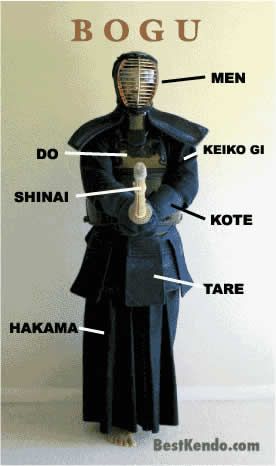
Our Head Instructor or sempai will make the determination on when a new student will move into the advanced class, and when they shall put on bogu. The fundamentals of Kendo must first be learned and the muscles used in Kendo must be developed and become strong enough to withstand the rigors of practice.
Memo to Parents and Guardians of students under the age of 15:
Members under the age of 15 are required to have a parent or guardian at the practice location during practice times.
The instructors at Tampa Kendo Dojo endeavor to apply our years of practice to teaching your children. We accept that we will need to teach them the types of etiquet that is expected in the dojo and will do this with patience and tactfulness. The one thing we ask of the parents is that you remind your child before practice to pay attention and treat the instructors with respect.
What is commin injuries ?
Even though Kendo is full contact sports, Kendo probably has a lower rate of injury than most martial arts. Kendoka rarely incur injuries worse than a bruise, although there are exceptions of course
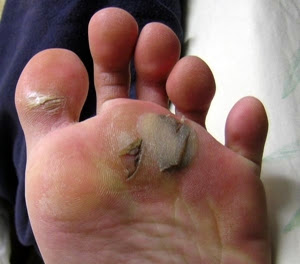
Most common are blistered/torn feet and bruised forearms and ribs. Bruised heel is probably the most common injury that prevents practise, after that plantar fascitis.
Torn achilles tendon is the most serious common injury, only seen one of those thank god. I've personally had all sorts of bruises including the heel, tendonitis in the rotator cuff, bruised tendon sheath or possibly tendonitis in the wrist and taken the odd thump to the windpipe back when I had the bad habit of coming in with my chin up. Nothing serious so far, thank goodness, and that's in nearly 6 years of practice.
A correct shinai blow which lands on target, ie on the armour, should't hurt. A heavy handed cut driven by too much muscle, a typical beginner's stroke, can hurt a bit, more so if the armour is old and soft. The shinai itself is designed to flex and absorb the blow. A cut which misses the armour causes no worse than a bruise, although it certainly can hurt at the time.
Click this for Kendo Terminology
Tampa Kendo Dojo is a non-profit organization. The instructors (Sensei’s) are all volunteers. This means that we rely on dues, fundraisers and membership & family member volunteers.
We are also an affiliate of AUSFK and SEUSKF.
Do you have Age or Health Restrictions?
If you are in good health, you can learn and practice kendo at any age. However, we recommend that children wait until they are 6 or 7 years old before starting. This is due to the inability of younger children to concentrate for extended periods of time. If you have any health problems or concerns (i.e. asthma, heart condition, high blood pressure, etc.), as with any exercise program, please consult a doctor prior to starting Kendo. Currently our students range in age from 6 to 64.
I am Very Interested in Kendo Because I just saw..(select movie)..Crouching Tiger, Hidden Dragon, Kill Bill or The Last Samurai. When will we be working on fancy sword work like that? Will Kendo be just as exciting as the movie?
Tampa Kendo Club is a traditional Kendo Dojo strictly focusing on the fundamentals of Kendo. As a beginner, you will be performing the same fundamental drills to learn etiquette, footwork, and how to correctly swing the shinai and bokuto. Please be advised that you will not be wearing bogu (armor) for at least 4-6 months. Please note that YOU WILL NOT BE practicing in a field or practicing forms against a sunset background. Additionally, THERE WILL NOT BE flashy sword work such as spinning the sword, two sword techniques or flying kicks taught. We do not teach that type of swordmanship that you see on the movie screen. It is entertaining and we enjoy those movies too, but that type of swordsmanship is based on cinematic stunt choreography and has little to do with the actual practice and lifelong study in the art of Kendo.
As a beginner, what should I wear to practice?
We suggest you wear comfortable loose fitting clothing such as sweats and a t-shirt.
What kind of Equipment do I need ?
A beginning kendoist will need to purchase a shinai. You may purchase your shinai directly from www.e-mudo.com. We may be able to lend you a shinai in first couple of classes but you will need to purchase your own. For beginner, you will need to buy a "complete kendo shinai with leather parts."
SHINAI SIZE REGULATION
Adult male: Size 39
Adult female: Size 38
Ages & Size
4-6 years old: Size 32
7-9 years old: Size 34
10-12 years old: Size 36
13-15 years old: Size 37
HOWEVER, THIS SHINAI SIZE MAY DIFFER DEPENDS ON YOUR HEIGHT AND WEIGHT. PLEASE CONSULT WITH SENSEI OR SEMPAI BEFORE YOU PURCHASE SHINAI
When should I purchase and wear the Keikogi and Hakama?
During the beginner phase, we suggest wearing shorts. This is to avoid any extra investment by the student should they wish to discontinue studying kendo soon after they enroll due to work schedules, relocation, change of heart, etc.
When can I put on the Bogu? Why does it take so long to get into Bogu (armor)?
Our Head Instructor or sempai will make the determination on when a new student will move into the advanced class, and when they shall put on bogu. The fundamentals of Kendo must first be learned and the muscles used in Kendo must be developed and become strong enough to withstand the rigors of practice.
Memo to Parents and Guardians of students under the age of 15:
Members under the age of 15 are required to have a parent or guardian at the practice location during practice times.
The instructors at Tampa Kendo Dojo endeavor to apply our years of practice to teaching your children. We accept that we will need to teach them the types of etiquet that is expected in the dojo and will do this with patience and tactfulness. The one thing we ask of the parents is that you remind your child before practice to pay attention and treat the instructors with respect.
What is commin injuries ?
Even though Kendo is full contact sports, Kendo probably has a lower rate of injury than most martial arts. Kendoka rarely incur injuries worse than a bruise, although there are exceptions of course
Most common are blistered/torn feet and bruised forearms and ribs. Bruised heel is probably the most common injury that prevents practise, after that plantar fascitis.
Torn achilles tendon is the most serious common injury, only seen one of those thank god. I've personally had all sorts of bruises including the heel, tendonitis in the rotator cuff, bruised tendon sheath or possibly tendonitis in the wrist and taken the odd thump to the windpipe back when I had the bad habit of coming in with my chin up. Nothing serious so far, thank goodness, and that's in nearly 6 years of practice.
A correct shinai blow which lands on target, ie on the armour, should't hurt. A heavy handed cut driven by too much muscle, a typical beginner's stroke, can hurt a bit, more so if the armour is old and soft. The shinai itself is designed to flex and absorb the blow. A cut which misses the armour causes no worse than a bruise, although it certainly can hurt at the time.
Click this for Kendo Terminology
2013년 5월 20일 월요일
2013년 3월 30일 토요일
University of Florida, Golden Shinai, March 2013
We had awesome time today. Our team won 3rd place !! I know I know.. actually, I am very confident that we could have won first place !! But winning or losing is not really important. Learn something new and having fun and being passionate about what you love is more important. Happy to have each of you and thanks for coming to UF !!
2013년 3월 16일 토요일
Mathew Raymond Sensei, 6th dan, visited from Toronto
World well known Nito Sensei, Mathew Raymond sensei, 6th dan, visited us on March 16, 2013. We all had great time and experienced very powerful Nito kenshi. Hope you all had good time. Mathew Raymond sensei was Canadian National Team for many years and now coaches Canadian Kendo national team for World Kendo Championship.
2012년 12월 7일 금요일
Fairwell Dongmin !
Dongmin is moving back to Korea next week. We had a farewell party last week. Dongmin has been practicing Kendo with us for more than 2 years and now has 2kyu. We hope he continues his kendo journey in the future.
2012년 12월 3일 월요일
December 2012 Promotion test result
Congratulation to Harnjoo Kim, Seungjoo Kim and Harrison Lee who passed shodan, 1kkyu and 2kyu test respectifully. You showed good efforts to pass this test. However, next test will be harder so you will need to practice more. Again, congratulation and continue your journey.
2012년 10월 19일 금요일
Sungmin Ro Passed 4th Dan Promotion Test
October 6.
Sungmin Ro passed Yondan(4th dan) promotion test at the 23rd SEUSKF Championship and Promotional Test, held in Atlanta, GA, Oct 6, 2012.
2012년 5월 6일 일요일
2012 All Florida Kendo Championship and Test
Kids Division Jungmin 1st place
Youth Division: James Ro 1st place Harnjoo 3rd place
1st-3rd Dan division Sungmin Ro 2nd place Derek 3rd place
Team Competition Tampa kendo club 1st place, with help of Maeda sensei
Test Result James Ro: 1st Dan Harnjoo: 1st Kyu Seungjoo: 2kyu Dongmin: 2kyu Jungmin: 6kyu
Great job everyone
Also special thanks to Jennifer who has been practicing with us !! Thank you all !!
피드 구독하기:
게시물 (Atom)